On this page20 sections
Sources and shipment example checked November 16, 2026.
Which beauty products should a new DTC brand test first? Start by comparing hydrating film-forming masks, hydrogel masks, lip care, everyday moisturizers and leave-in hair treatments. Look for a clear use occasion, a convincing finished-product experience, manageable variants and workable delivery costs. Validate samples, claims and margins before committing stock. Oral collagen peptides need a separate food or supplement assessment.
For a first launch, choose one lead product and one companion. Add a replenishment pack once you know what customers use and reorder.
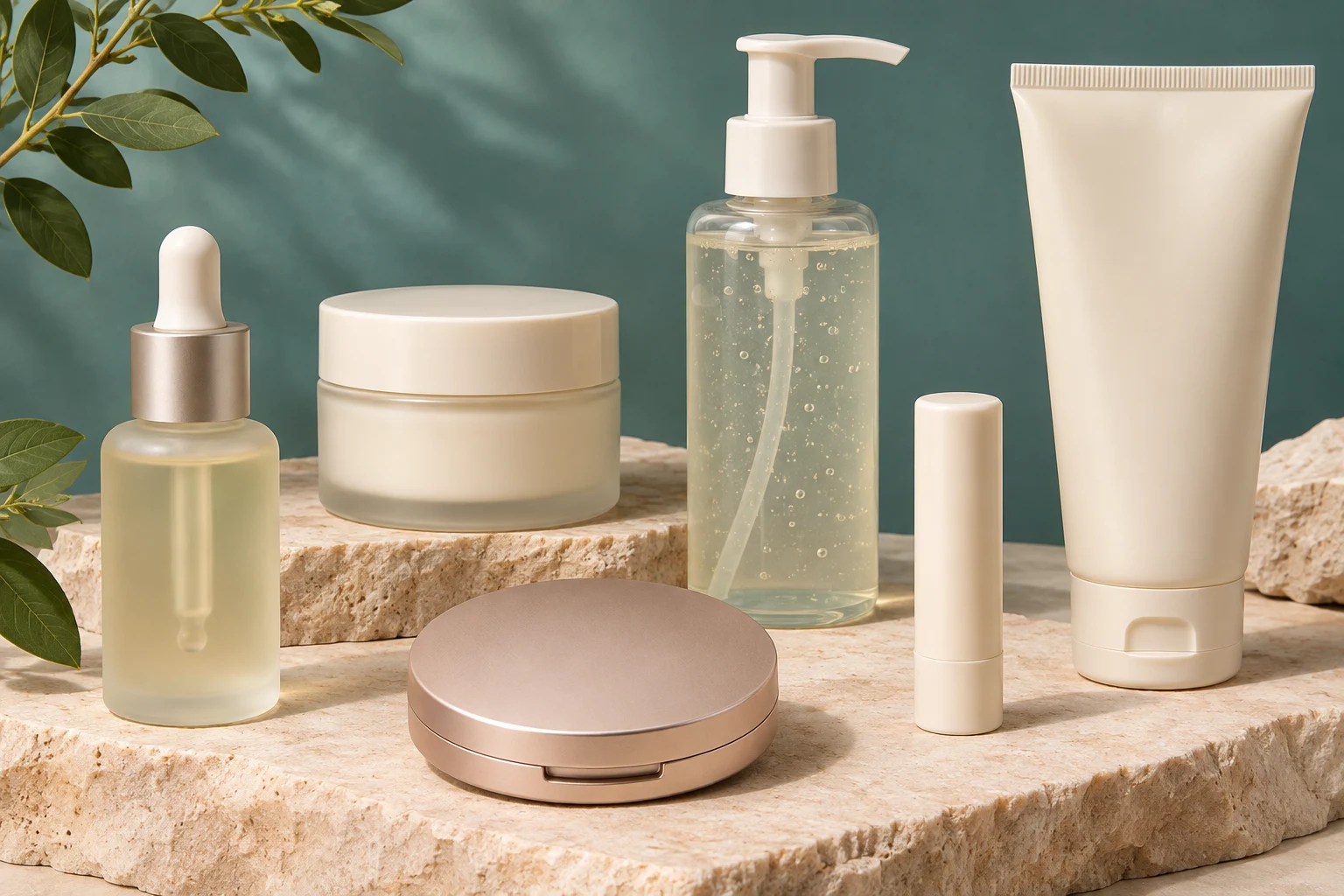
Beauty products worth shortlisting for a DTC launch
Demand exists, but that does not make every beauty product a good first SKU. Cosmetics Europe puts European skincare retail sales at €32.3 billion in 2025. That is broad category spending, not the revenue available to a new online brand. Source: Cosmetics Europe.
We shortlisted these formats for their use occasions, content potential and fulfillment considerations. The brand examples show what is already on sale; our recommendations still need testing against your samples, customer and costs.
| Product to investigate | Possible brand proposition | First question to resolve |
|---|---|---|
| 1. Hydrating peel-off wrapping mask | A distinctive evening-care ritual | Is application and removal genuinely comfortable? |
| 2. Collagen hydrogel mask | A weekly routine with multi-mask packs | Does the mask fit, stay intact and arrive properly sealed? |
| 3. Lip mask or conditioning balm | Bedside and everyday lip care | Does the texture stay consistent during storage and delivery? |
| 4. Clear or lightly tinted lip oil | Comfort and shine in one portable product | Can you avoid leakage and excessive shade inventory? |
| 5. Everyday moisturizer | A simple routine with a specific texture preference | Why would the customer switch from their current cream? |
| 6. Hydrating facial serum | A lightweight step that layers well | Does the finished formula perform well with other products? |
| 7. Leave-in hair treatment | Convenient care for a defined hair type or routine | Can you demonstrate the experience without unsupported repair claims? |
| 8. Small-format hair oil | Manageable application for hair ends | Are dispensing, fragrance and packed weight suitable? |
| 9. Cleansing balm | An easy-to-understand makeup-removal step | Are the formula, intended use and container well validated? |
| 10. Hand or targeted body cream | Care for a specific everyday occasion | Does it work better as a companion than a paid-ad lead product? |
Use this list to request samples and comparable quotes. Approve the finished product and market requirements before selling.
Peel-off masks and collagen hydrogel masks: choose the format first
1. Hydrating film-forming peel-off masks
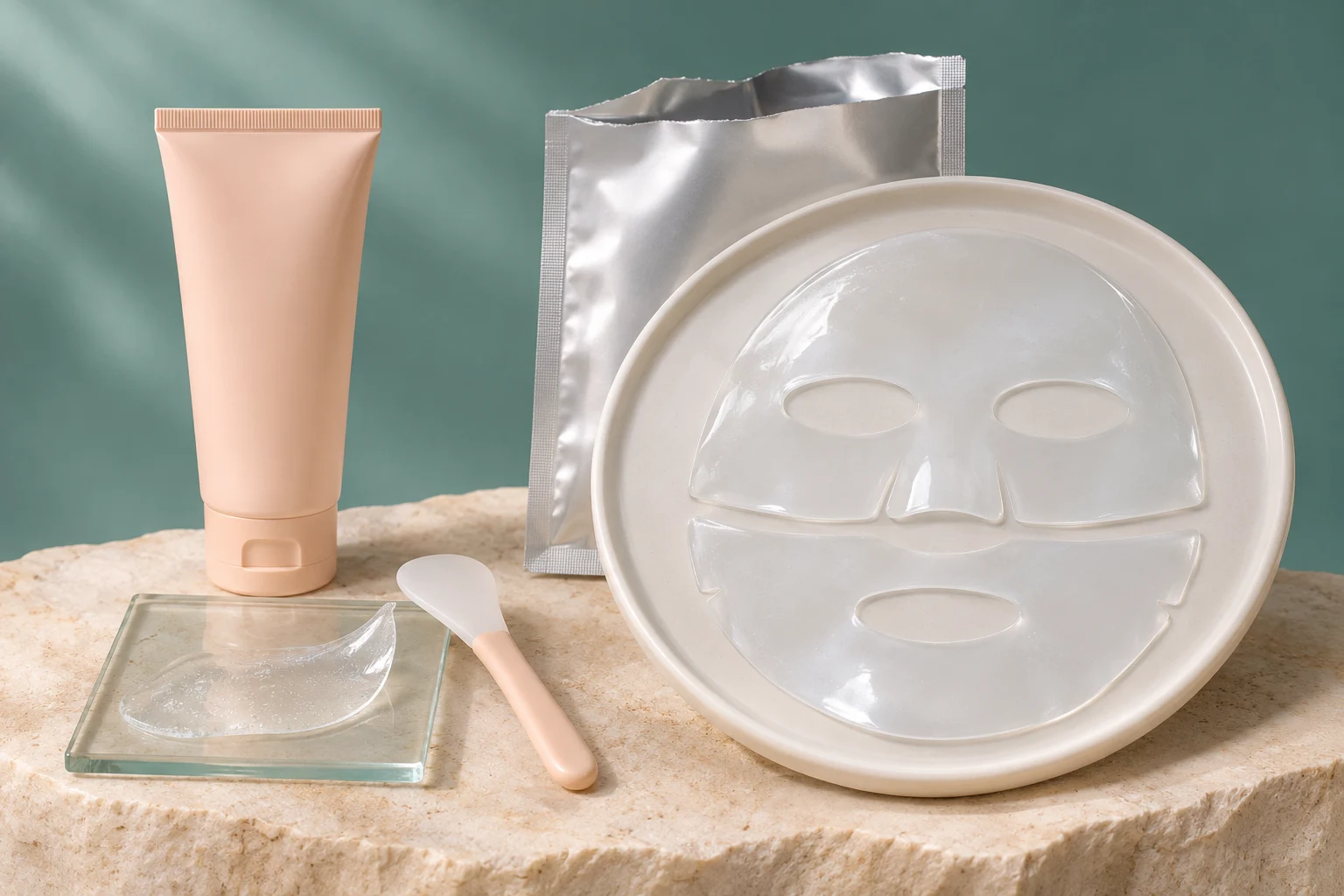
A mask that spreads, forms a film and peels away gives you a product demonstration customers can follow. Medicube’s wrapping mask is an example of this format in the market. Its results and usage claims do not transfer to another manufacturer’s formula.
Ask suppliers for the exact sample you would buy. Record how much is needed, how evenly it spreads, how long it takes to form a film and whether removal leaves fragments. Check the instructions and suitability of the proposed wear time. Do not label an unvalidated product “overnight” simply because a competitor does.
For a first range, we would investigate a hydrating, comfortable-removal concept before a strong-adhesion cleansing mask. The customer should want to repeat the experience after the first satisfying video.
2. Collagen hydrogel masks
A ready-made hydrogel mask is a different proposition: portioned application, a defined wear routine and a straightforward multi-pack offer. Biodance’s product page illustrates how this format can be presented in several pack sizes.
Compare fit, slipping, tearing and pouch integrity. Quote a single pack and a larger replenishment pack separately. A mask changing appearance during use is not proof of collagen entering the skin, and a collagen ingredient does not establish a finished product’s anti-ageing effect. Build the claim around evidence for your own product.
What shipping can change: a mask example
For a face-mask order, PICKOSHIP confirmed a $5.28 total fulfillment and China-to-US DDP delivery fee. This includes storage, pick and pack, packing materials, international transport, customs clearance, duties and last-mile delivery, with no additional fulfillment fees for this order. The same itemized US Warehouse example used in our shipping guide totals $10.87. The difference is $5.59 per order, or 51.4% below that example total.
PICKOSHIP confirms six days from China to the US customer’s doorstep for this shipment. The customer-facing tracking view below omits the China-leg events and shows the US delivery updates; it does not mean the parcel was shipped from US stock.
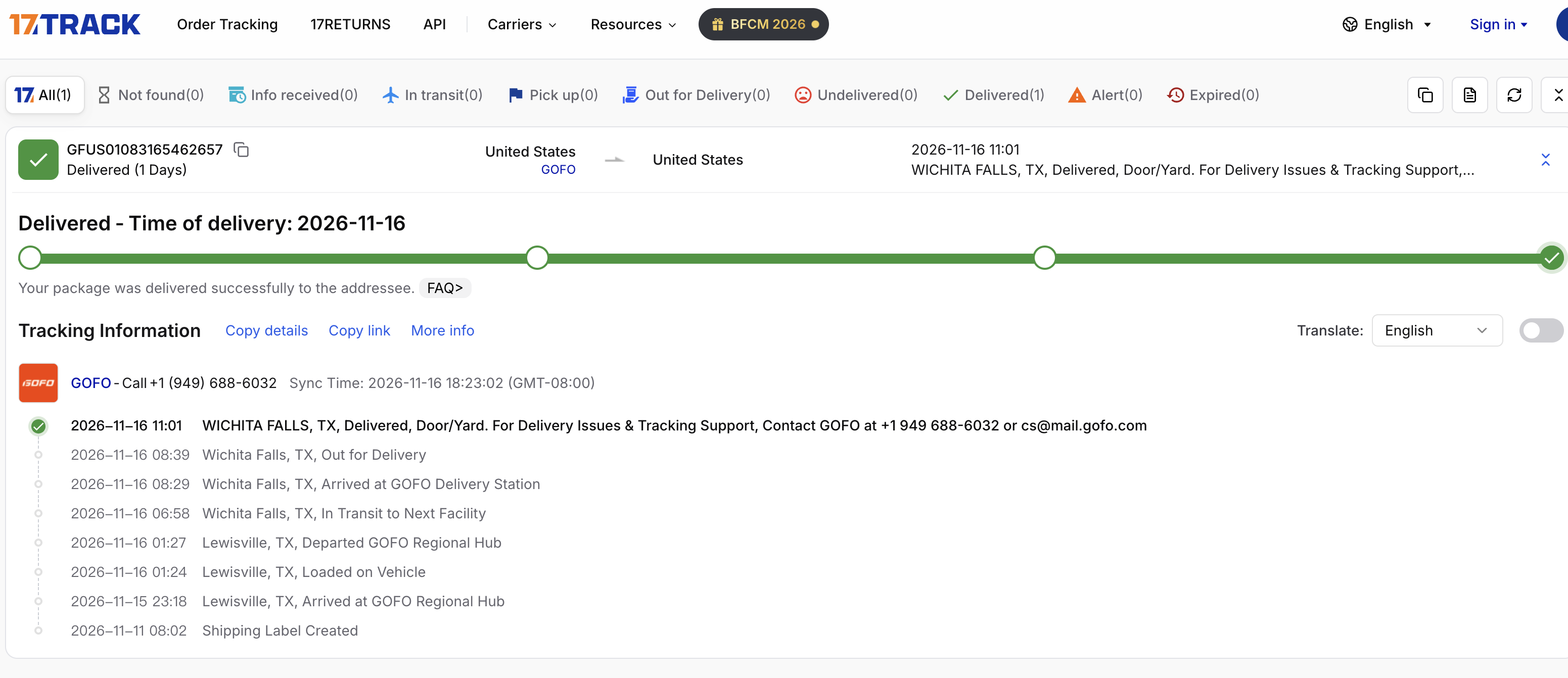
Tracking number: GFUS01083165462657
The US Warehouse example includes ocean freight $0.70, handling $0.50, drayage $0.30, customs $1.50, storage $0.55, pick and pack $1.00, shipping $6.32 and inventory costs $0.00. These total $10.87. The figures are supplied by PICKOSHIP and are an example, not a market average or universal price. Product purchase, advertising and returns are excluded; inventory financing is not priced in this example. The six-day delivery is one shipment result, not a delivery guarantee. See the itemized China direct vs US Warehouse cost table.
Lip care, skincare and haircare: build around a repeatable routine
3–4. Lip masks, balms and lip oils
Lip care gives a brand several familiar occasions: a product beside the bed, in a handbag or used before makeup. Rhode’s lip treatment is a useful format reference, but its brand recognition is not something a new label inherits.
Begin with a narrow range. Compare texture, dispensing, graininess, odour and leakage. A low-priced single item may leave too little contribution after acquisition and delivery; test a pair or a complementary set. More shades mean more inventory decisions before demand is established.

5–6. Everyday moisturizers and hydrating serums
These need a sharper reason to buy than “contains a popular ingredient.” Define the texture and use occasion: a light product under makeup, a straightforward evening routine or a compact travel format. Geek & Gorgeous’s moisturizer page shows one way to explain texture and intended users clearly.
Compare pilling, dispensing and how the product behaves within the intended routine. Ask what supports claims such as fragrance-free or suitable for sensitive skin. Packaging and clear information can improve the offer, but they cannot compensate for a disappointing formula.
7–8. Leave-in treatments and small-format hair oils
Haircare deserves serious consideration. Circana reported that US prestige haircare sales grew 11% in the first half of 2026, with unit sales up 8%; treatments were a major driver. This is a category signal, not a forecast for a particular private-label product. Read Circana’s report.
Choose a specific routine and test on the relevant hair types. Show application quantity, combing and finish honestly. K18’s range offers a reference for lead products and different sizes—not permission to reuse its technology or claims. Avoid turning a cosmetic haircare offer into an unsupported hair-growth promise.
9–10. Cleansing balms and hand or body creams
These are useful candidates for extending a coherent range. A cleansing balm can connect to an evening routine; hand cream can fit an on-the-go set. They are less convincing additions when their only purpose is to make the catalogue look bigger.
Check the full packed weight and container performance. Decide whether the product earns its place through its own demand or by improving a bundle. Treat these two as range extensions to test with customers who already buy the main product.
What about collagen peptides for a beauty brand?
Separate three projects: collagen-containing topical cosmetics, topical peptide skincare, and oral collagen supplements. Their ingredients, evidence and responsibilities are not interchangeable.
Oral collagen can be researched around a daily consumption routine, taste, mixing convenience and replenishment. Vital Proteins demonstrates a powder and subscription format. Neither the format nor an ingredient supplier’s study proves the benefits of your finished product.
It also needs a different import review. In the US, food prior-notice and applicable supplement importer requirements need to be addressed. In the EU, the European Commission’s animal-product import guidance flags China-origin collagen as not authorised under the category it describes. Do not assume a particular hydrolysed ingredient or finished supplement is either exempt or prohibited without checking its classification.
FDA: prior notice · FDA: importer verification · European Commission: animal-product imports
Our recommendation: keep oral collagen outside a new cosmetics launch until the ingredient source, market requirements and legal import arrangement are resolved.
How to choose beauty products for your Shopify brand
If you are still comparing categories beyond beauty, start with our broader DTC product selection guide. Use the steps below once you have narrowed the business to beauty.
- Write a specific customer brief. Name the routine, the existing frustration and the reason to try your version. “Popular skincare” is not enough.
- Compare at least two suppliers. Request matching information: exact formula, sample batch, manufacturer identity, supporting documents, minimums, lead times and repeat-order terms.
- Approve the finished product and pack. Review the label, instructions, container and shipping protection together. Supplier certificates must match what you intend to sell.
- Check the delivered economics. Quote the lead product, a companion set and a refill or multi-pack. Include damage, returns and payment costs.
- Pilot before scaling. After safety and market requirements are addressed, test representative orders and honest creative. Track contribution, delivery, complaints and actual repeat purchases.
Maximum target CAC = net sales revenue − all non-ad variable costs − the contribution you want to retain
For an illustrative order with $40 net revenue and $20 in non-ad variable costs, keeping $5 leaves $15 for acquisition. Those are example inputs, not industry averages or a PICKOSHIP quote. Do not fund first-order losses with repeat purchases that have not happened yet.
Useful differentiation can be modest: a more convenient closure, better instructions, a pack size suited to the routine or a formula with a well-supported benefit. Copying another brand’s appearance and calling the product a “winner” does not give customers a reason to return.
Plan the US, EU and UK as distinct launches
Pick the first country you can serve well, including language, customer support, product obligations and delivery. Do not translate a US page and assume the same claims and label work everywhere.
- US cosmetics: establish applicable MoCRA registration and listing duties and any exemptions. Registration is not product approval. FDA guidance.
- EU cosmetics: establish the Responsible Person, product file and safety report, and required notification before market entry. HPRA guidance.
- Great Britain: check the separate responsible-person and notification arrangements; Northern Ireland needs its own assessment. UK government guidance.
For a first launch, we would leave SPF, treatment-claim products, oral supplements and complex devices out of the default shortlist unless the business already has the necessary expertise and evidence. These are planning priorities, not a complete compliance checklist.
Turn your shortlist into a shipping plan with PICKOSHIP
The cheapest factory quote is not necessarily the best product for your brand. A heavier bottle, extra protective packaging or a different bundle can change what is left after delivery.
PICKOSHIP offers competitive cosmetics shipping rates and fast delivery options through dedicated cosmetics shipping channels for eligible products. Bring us your shortlist so product selection and fulfillment costs can be considered together, before you commit to packaging or scale advertising.

Ask us to compare the single-item and bundle configurations for your target countries, identify the information needed for route assessment, and quote the agreed packing and shipping scope. Request processing time and transit time separately, with the quote’s validity and exclusions.
For accepted cosmetics, that gives you a practical basis for pricing and customer delivery promises. The quote should identify the accepted SKU, destination, service and current terms. For the document and packing checklist, read our guide to shipping cosmetics from China to the US and EU. Our sensitive-goods service page lists the categories we assess.
Beauty product selection: common questions
What are the best beauty products for a new DTC brand?
There is no universal winner. Our starting shortlist is masks, lip care, everyday moisturizers and leave-in hair treatments, selected against a particular customer routine. The final choice needs sample, cost, compliance and demand evidence.
Are peel-off face masks a good private-label product?
They are worth evaluating for a brand that can deliver a comfortable, well-documented use experience. Compare the actual formula, film formation, removal and pack. Keep a record of the finished product’s wear time, removal and customer feedback.
Should I start with one beauty product or a complete range?
Usually, begin with one lead product and a useful companion. A small range makes it easier to learn which offer sells and which product customers replenish before adding variants.
Can PICKOSHIP ship cosmetics from China to the US and Europe?
PICKOSHIP assesses eligible cosmetics for dedicated shipping channels and provides destination-specific options. Send the exact product and packed specifications so acceptance, cost and estimated timing can be confirmed.
Compare shipping options before you choose your beauty product
Send PICKOSHIP two or three product links or photos, your target countries and expected monthly orders. Include packed weight, dimensions and units per order if available.
Get product-specific shipping options, competitive pricing and delivery estimates for the offer you actually plan to sell.
Compare Shipping for Your Product Shortlist →Prefer email? Send your product details to info@pickoship.com.
info@pickoship.com · Start with your product link and destination.